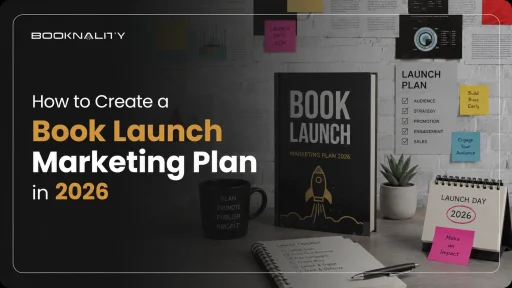

You’ve finished your book. That’s huge. Seriously, most people who say “I want to write a book” never actually do it. You did. But here’s the part that catches a lot of authors off guard: finishing the book is just the beginning. What happens next, how you introduce it to the world, determines whether it quietly disappears or actually finds its readers. That’s where a solid book launch marketing plan comes in.
A launch isn’t a single day. It’s not just posting “my book is out!” on Instagram and hoping for the best. It’s a structured, intentional campaign that builds anticipation before release, drives momentum on launch day, and sustains visibility long after.
In this guide, we’ll walk you through exactly how to build a book launch strategy that works, step by step, from months out to post-launch. Whether you’re self-publishing for the first time or you’ve been through a launch before and want to do it better, this is your roadmap.
Step 1: Start Earlier Than You Think (3–4 Months Out)
If there’s one mistake that shows up in almost every failed book launch campaign, it’s starting too late.
Most authors think of promotion as something that happens after the book is done. In reality, your launch begins the moment you know your release date.
Here’s what to get in place 3–4 months out:
- Lock in your release date. Everything else is scheduled around this.
- Set up or refresh your author website. Make sure it has a dedicated book page with a pre-order or “coming soon” section.
- Define your target reader. Who is this book for? Be specific. “Everyone” is not a target audience.
- Identify your goals. Are you aiming for a bestseller ranking? Building an email list? Selling a certain number of copies in the first 30 days? Your goals shape your strategy.
This early stage is also the right time to start working with a professional team if you need one. At Booknality, we work with authors well before launch to ensure every piece of the marketing puzzle is ready to go when it matters most.
Step 2: Build Your Pre-Launch Foundation (8–10 Weeks Out)
Think of this phase as laying the groundwork. You’re not selling yet, you’re warming up.
If you don’t have one, start now. Offer a freebie, a sample chapter, a bonus resource, a short companion piece, in exchange for sign-ups. Your email list will be your most powerful asset on launch day.
Seriously, write it down. A good book launch checklist covers everything from your review outreach schedule to your social media content calendar to your ad setup timeline. Without a checklist, things fall through the cracks.
Reach out to book bloggers, newsletter writers, BookTok creators, and NetGalley readers in your genre. Give them 4–6 weeks to read and review before your launch. Early reviews are the engine of a strong book release marketing plan.
Share the cover. Post a quote. Go behind the scenes. You’re not asking anyone to buy yet; you’re building curiosity. Let your audience feel like insiders.
Step 3: Line Up Your Press and Media (6–8 Weeks Out)
Media coverage doesn’t happen overnight. Journalists, podcast hosts, and bloggers all work on lead times, sometimes weeks in advance.
This is the window to:
- Write and send your press release. Tie your book to something timely or culturally relevant. Pitch local newspapers, regional magazines, and niche online publications.
- Book podcast guest spots. Identify podcasts your target readers actually listen to and pitch yourself as a guest for the weeks surrounding your launch.
- Reach out to book clubs. Offer a free discussion guide and an offer to join their meeting virtually. Book clubs can drive 10–30 purchases in one shot.
This is also the right time to prepare your author bio, talking points, and a short “elevator pitch” for your book. You’ll use these across every media opportunity, so get them tight and consistent.
Step 4: Activate Your Launch Team (4–6 Weeks Out)
A launch team, sometimes called a street team, is a small group of enthusiastic early readers who help spread the word on launch day.
Recruit readers from your email list, social media following, or personal network. Give them an early copy, a behind-the-scenes peek, and clear, simple asks: leave a review, share a post, tell a friend.
The beauty of a launch team is that it multiplies your reach without multiplying your budget. When 20–50 people all post about your book on the same day, it creates a ripple effect that no single author account can manufacture alone.
Your book launch strategy should treat your launch team as VIPs. Keep them engaged, thank them publicly, and make them feel part of something.
Step 5: Set Up Your Paid Promotion (3–4 Weeks Out)
Organic reach is great. But if you have any budget to work with, paid promotion can significantly amplify your launch.
Options to consider:
- Amazon Ads: Target readers by genre, comparable authors, or keywords. Great for discoverability directly at the point of purchase.
- Facebook and Instagram Ads: Powerful for building awareness among cold audiences, especially with a strong visual (hello, book trailer).
- BookBub Ads: Highly targeted book-lover audience. Smaller scale but often excellent ROI.
- Newsletter sponsorships: Pay to be featured in curated book newsletters like The Fussy Librarian or BookBub.
Don’t wait until the week of launch to set these up. Ads need testing time, and platforms sometimes take days to approve creatives.
If paid advertising feels overwhelming, our book marketing team can build and manage a campaign strategy tailored to your book, your genre, and your budget.
Step 6: Create a Content Calendar for Launch Week
Launch week needs a plan of its own within your broader book release marketing plan.
Map out every day of launch week:
- Day 1 (Launch Day): Big announcement post across all platforms. Email your list. Go live on social media. Make it feel like an event.
- Day 2–3: Share reader reactions, early reviews, and “behind the book” content.
- Day 4–5: Reshare media coverage, podcast appearances, or press mentions.
- Day 6–7: Final push, share your Amazon or retailer link with a clear call to action.
The key is consistency without feeling desperate. You want to show up daily without making your entire online presence feel like one long sales pitch.
Mix promotional content with personal, story-driven content. Why did you write this book? What do you hope readers take away? Authenticity always outperforms a hard sell.
Step 7: Think Beyond Launch Day
Here’s something the publishing world doesn’t talk about enough: most books don’t sell primarily in their first week.
A great book launch campaign is designed to create long-term momentum, not just a single spike. The authors who build lasting readerships are the ones who keep showing up months after the launch date.
Post-launch, keep these going:
- Keep collecting reviews. Include a gentle ask at the back of your book.
- Run periodic price promotions. A discounted price on key platforms every few months keeps your book cycling through recommendation algorithms.
- Keep writing. Every new book you release drives traffic back to your older titles.
- Stay active on Goodreads. Engage with readers who leave reviews; even just a “thank you” goes a long way.
For a complete look at how to keep your book visible after launch, check out our guide on 15 Book Promotion Strategies That Actually Work. It covers the long-game tactics every author needs.
Your Book Launch Checklist at a Glance
To pull everything together, here’s a quick book launch checklist you can work from:
3–4 Months Out
- Confirm release date
- Set launch goals
- Refresh author’s website
- Define target audience
8–10 Weeks Out
- Build or grow email list
- Send ARC copies
- Create social media tease content
- Build your detailed launch checklist
6–8 Weeks Out
- Write and distribute a press release
- Pitch podcast guest spots
- Reach out to book clubs
- Prepare author bio and talking points
4–6 Weeks Out
- Recruit and activate the launch team
- Provide the launch team with early copy and instructions
- Begin review outreach
3–4 Weeks Out
- Set up paid ads
- Finalize launch week content calendar
- Confirm all media and podcast dates
Launch Week
- Execute daily content calendar
- Email your list on Day 1
- Engage with every comment, review, and share
- Track sales and adjust in real time
Post-Launch
- Continue review collection
- Plan first price promotion
- Maintain social media presence
- Begin planning your next book or project
Do You Need Professional Help with Your Launch?
Honestly? A lot of authors do, and there’s no shame in that.
How to launch a book successfully requires skills across copywriting, digital advertising, media relations, social media, and more. Most authors are brilliant writers, not marketing strategists. That’s exactly why professional support exists.
At Booknality, we’ve helped authors across every genre build launches that generate real visibility and real sales. From crafting your book launch marketing plan to executing it across every channel, we handle the marketing so you can focus on what you do best, writing.
If you’re self-publishing and wondering where to even begin, our beginner’s guide to self-publishing services is a great starting point.
Bottom Line
A great book without a great launch is a missed opportunity. But a great book with a smart, well-timed book launch strategy? That’s how authors build real careers.
The authors who win long-term aren’t always the ones with the biggest budgets or the most followers. They’re the ones who planned ahead, stayed consistent, and understood that a book launch isn’t a single moment; it’s a campaign that builds over weeks and months.
Think of your launch as the opening chapter of your book’s life in the world. It sets the tone, creates the first impression, and plants seeds that will keep growing long after launch day is over. A reader who discovers your book six months from now because of a review left in week one? That’s your book launch marketing plan still working for you.
So, start early. Map out your timeline. Build your list. Recruit your launch team. Get your press outreach done before you need it. And when launch day finally arrives, celebrate it, because you’ve earned it.
Your book has a story worth telling. With the right book launch campaign behind it, the right readers will find it, connect with it, and carry it further than you ever could on your own.
Now go launch that book; the world is waiting.